01 · At the dock
A departure point in the backyard.
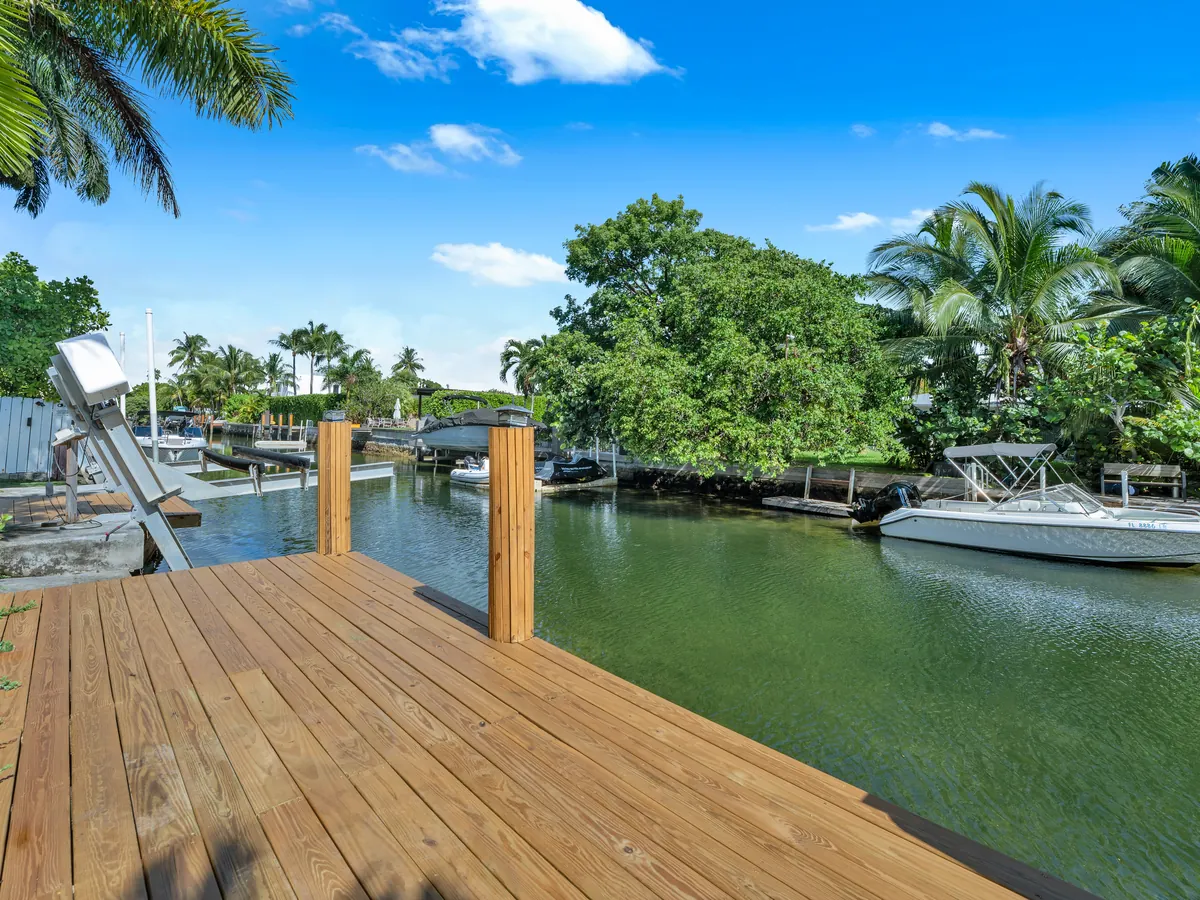
A private dock changes the practical experience of owning a boat. There is no drive to a marina, launch-ramp queue, or separate trip to check lines after the weather changes. The vessel is visible from home and available when conditions are right.
A lift adds another layer of usability. When correctly rated and configured for the hull, a lift keeps the boat out of the water between outings. That can simplify routine rinsing and inspection while reducing continuous exposure below the waterline.
Lift capacity alone does not establish compatibility. Beam, length, hull geometry, weight with fuel and equipment, cradle configuration, dock dimensions, water depth, and access route all need to work for the intended vessel.
02 · Navigation
Waterfront footage is only the beginning.
A serious boater evaluates the entire route, not just the dock. That includes controlling depth at different tide states, fixed and movable bridge clearances, posted slow-speed or no-wake zones, channel markers, turning room, and the safest route toward open water.
Conditions and regulations can change. Before purchase, run the route with a qualified local captain or marine professional using the actual dimensions and operating profile of the boat you plan to keep there. Review current charts, notices, bridge schedules, and Florida Fish and Wildlife Conservation Commission rules rather than relying on a generalized “ocean access” label.
03 · Buyer checklist
Inspect the land-water edge carefully.
The seawall, dock, pilings, electrical service, and lift are working infrastructure. They deserve the same level of review as the roof, structure, plumbing, and HVAC.
- Confirm a current survey, legal waterfront boundaries, and usable dock frontage.
- Review permits and final inspections for the seawall, dock, lift, electrical work, and later modifications.
- Engage qualified professionals to assess seawall movement, cracking, cap condition, tiebacks, pilings, decking, hardware, and lift operation.
- Measure water depth at relevant tide conditions and verify clearance through the full route.
- Obtain insurance guidance early, including flood, wind, and waterfront-specific considerations.
- Confirm current municipal, county, state, and environmental rules before planning changes.
04 · Stewardship
Good waterfront ownership is active.
Salt air, sun, tides, and storm conditions are part of South Florida waterfront ownership. A practical maintenance plan covers lift cables and motors, shore power, fasteners, dock surfaces, pilings, drainage, pool equipment, landscaping, and hurricane preparation.
Biscayne Bay is also an ecological resource. Responsible operation means following speed zones, respecting seagrass and wildlife, preventing discharge, containing debris, and using pump-out and marina services appropriately. Miami-Dade County and FWC publish current boating and marine guidance.
05 · 1777 Daytonia Road
Sixty feet of waterfront, ready to use.
The property is offered with 60 feet of canal frontage, a private dock, and a 7,000-pound electric boat lift. The dock, pool, and broad patio form one connected outdoor zone, so the water remains part of the home even when the boat stays on the lift.
All dimensions, equipment ratings, access claims, and improvements should be independently verified during due diligence for the buyer’s intended use.
View the waterfront homeBoating resources: Miami-Dade County marinas; Florida Fish and Wildlife Conservation Commission boating regulations; City of Miami Beach natural resources. Regulations and conditions change; verify current requirements and navigational conditions with the appropriate authorities and qualified professionals. Last reviewed September 2026.